Certifications Worth Your Investment: A No-Nonsense ROI Guide for American Business Professionals in 2024
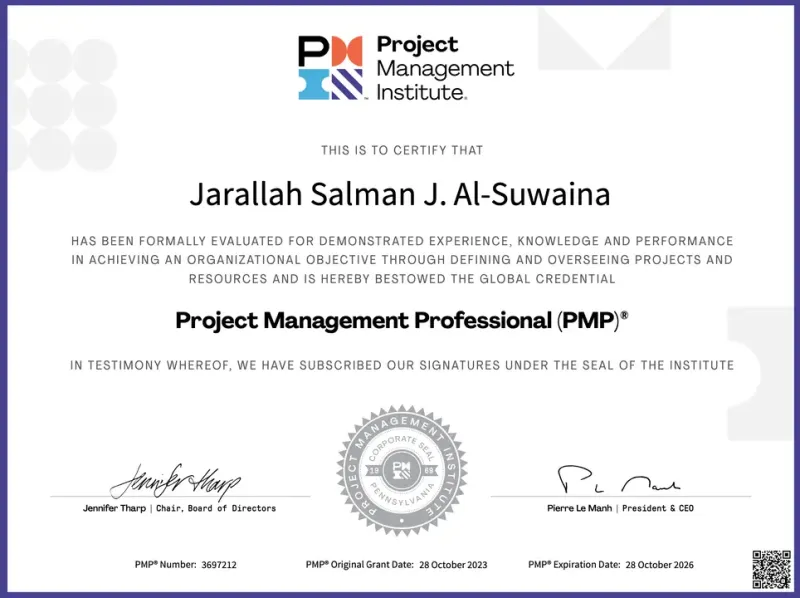
Photo: professional certification exam study business credentials, via res.cloudinary.com
The American professional development industry generated an estimated $366 billion in 2023, and a significant portion of that figure flows directly from the sale of certifications, credentials, and continuing education programs. Boot camps, professional bodies, and online platforms compete aggressively for the attention — and the tuition dollars — of ambitious professionals eager to sharpen their competitive edge.
The problem is that not all credentials are created equal. For every certification that demonstrably lifts earning potential or accelerates advancement, there are several that are either so widely held as to be table stakes, so narrowly recognized as to be effectively invisible, or so misaligned with actual hiring criteria as to produce little measurable benefit.
For business professionals making deliberate investments in their own development, the ability to distinguish between these categories is not merely useful — it is financially consequential.
How to Think About Certification ROI
Before evaluating specific credentials, it is worth establishing a consistent framework for measuring return on investment. The relevant variables include: direct salary impact (the measurable income differential between certified and non-certified professionals in the same role), promotion velocity (whether credential holders advance more rapidly than peers), market saturation (the degree to which a certification has become so common that it no longer differentiates), and employer recognition (whether the credential carries genuine weight with hiring managers and promotion committees in your target sector).
Cost must also be factored holistically. Certification expenses include examination fees, preparatory coursework, study materials, renewal fees, and — critically — the opportunity cost of time invested. A credential requiring 300 hours of preparation and $3,500 in fees needs to generate substantially more than $3,500 in incremental earnings to justify the investment.
With that framework in place, here is an honest assessment of where the most credible data points in 2024.
High-ROI Credentials Worth Prioritizing
Project Management Professional (PMP) — Project Management Institute
The PMP remains among the most consistently validated credentials in the American business landscape. The Project Management Institute's annual salary survey reports that PMP holders in the United States earn a median salary approximately 16 percent higher than their non-certified counterparts — a differential that translates to roughly $20,000 annually at median compensation levels. Critically, this premium has held relatively stable despite the credential's widespread adoption, suggesting that employer demand continues to outpace supply in many sectors including construction, technology, healthcare, and financial services.
The PMP does require meaningful prerequisites — a minimum of 36 months of project leadership experience for degree holders — which naturally limits saturation and preserves its signal value. For professionals managing complex initiatives or targeting operations and delivery leadership roles, this credential delivers among the clearest documented returns currently available.
Certified Financial Planner (CFP) — CFP Board
Within financial services, the CFP designation functions less as a differentiator and more as a prerequisite for client-facing advisory roles at reputable firms. That distinction matters: professionals who have not yet obtained the CFP and are targeting wealth management, financial planning, or advisory positions are effectively competing with one hand tied behind their back in many markets.
BLS data and CFP Board surveys consistently show that CFP professionals command median compensation well above non-certified peers in comparable roles, with some analyses placing the premium at 25 percent or higher. The examination is rigorous and the educational requirements substantial, which continues to protect the credential's value against dilution.
AWS Certified Solutions Architect — Amazon Web Services
For professionals operating at the intersection of business and technology — a category that increasingly encompasses operations leaders, product managers, and digital transformation executives — AWS certifications have demonstrated strong market traction. The Solutions Architect credential in particular commands consistent salary premiums in technology, consulting, and enterprise environments. Global Knowledge's IT Skills and Salary Report has repeatedly identified AWS certifications among the highest-compensating credentials in the technology sector, with certified professionals in the United States earning median salaries exceeding $130,000.
The caveat worth noting is that the cloud certification space is evolving rapidly. Microsoft Azure and Google Cloud credentials are gaining market share, and professionals should evaluate which platforms dominate their target employer landscape before committing to a specific vendor pathway.
SHRM-SCP and SHRM-CP — Society for Human Resource Management
For HR professionals, the SHRM credentials have largely supplanted the legacy HRCI designations as the preferred signal of practitioner competence among American employers. SHRM's own research indicates that credential holders earn meaningfully more than non-certified peers and report higher rates of career advancement. These credentials are particularly valuable for HR generalists targeting director-level and above roles, where the strategic framing of the SHRM curriculum aligns well with what senior stakeholders expect from people leaders.
Credentials Warranting Careful Consideration
MBA from Non-Target Programs
The MBA occupies a complicated position in the 2024 credential landscape. From elite programs — Wharton, Booth, Kellogg, Harvard, Stanford — the degree continues to deliver substantial network access and employer prestige that justify the significant investment. From second- and third-tier programs, the calculus is considerably murkier. Several analyses suggest that the salary premium for non-target MBA graduates has compressed over the past decade, while student debt obligations have grown. Professionals considering an MBA from a regional or lower-ranked program should conduct rigorous due diligence on alumni outcomes before committing.
Lean Six Sigma Black Belt
Lean Six Sigma credentials have experienced significant proliferation, with dozens of certifying bodies now offering programs at varying price points and rigor levels. The credential retains genuine value in manufacturing, healthcare operations, and supply chain environments where the methodology is actively practiced. However, professionals in industries where process improvement is less culturally embedded may find that hiring managers accord the credential limited weight. Verify employer expectations in your specific sector before investing.
Credentials Showing Signs of Saturation
Entry-Level Digital Marketing Certifications
Google Analytics, HubSpot, and similar platform-specific certifications were meaningfully differentiating five years ago. Today, they are so widely held among marketing professionals — and so straightforward to obtain — that they function primarily as baseline expectations rather than competitive advantages. Professionals seeking to distinguish themselves in digital marketing should look toward more specialized or advanced credentials, or toward demonstrable portfolio outcomes that speak more directly to employer priorities.
Making the Decision That Fits Your Career
The most valuable credential you can pursue is the one that addresses a specific gap between where you are and where you intend to go — not the one with the most impressive marketing copy or the largest claimed salary premium. Before investing, speak with hiring managers or senior professionals in your target roles about which credentials they actually weigh in promotion and hiring decisions. That intelligence, gathered directly from the market, is worth more than any published ranking.
KDVA America members have access to peer advisory networks and industry roundtable discussions that provide precisely this kind of on-the-ground intelligence. Leveraging those resources before committing to a credential investment is among the most practical applications of professional association membership available to American business professionals today.
The credential market will continue to expand. The professionals who navigate it most effectively will be those who evaluate each opportunity not through the lens of prestige or popularity, but through the disciplined lens of documented, measurable return.